PEAK CLIMBING · 10 & 20 APRIL 2027
Lobuche East Peak
Everest Base Camp, Kala Patthar and your own 6,000-metre summit in one journey: this 19-day trip combines the classic Khumbu route with a technical ascent of 6,119-metre Lobuche East.
Duration
19 days
Max. Altitude
6,119 m
Difficulty
Demanding
Group Size
max. 11 people
Route Lobuche East
Season
Spring
Experience
High-altitude experience
YOUR 6,000-METRE PEAK IN THE EVEREST REGION
From the trekking trail to your own summit.
This journey combines some of the best-known places in the Everest region with your own technical summit objective.
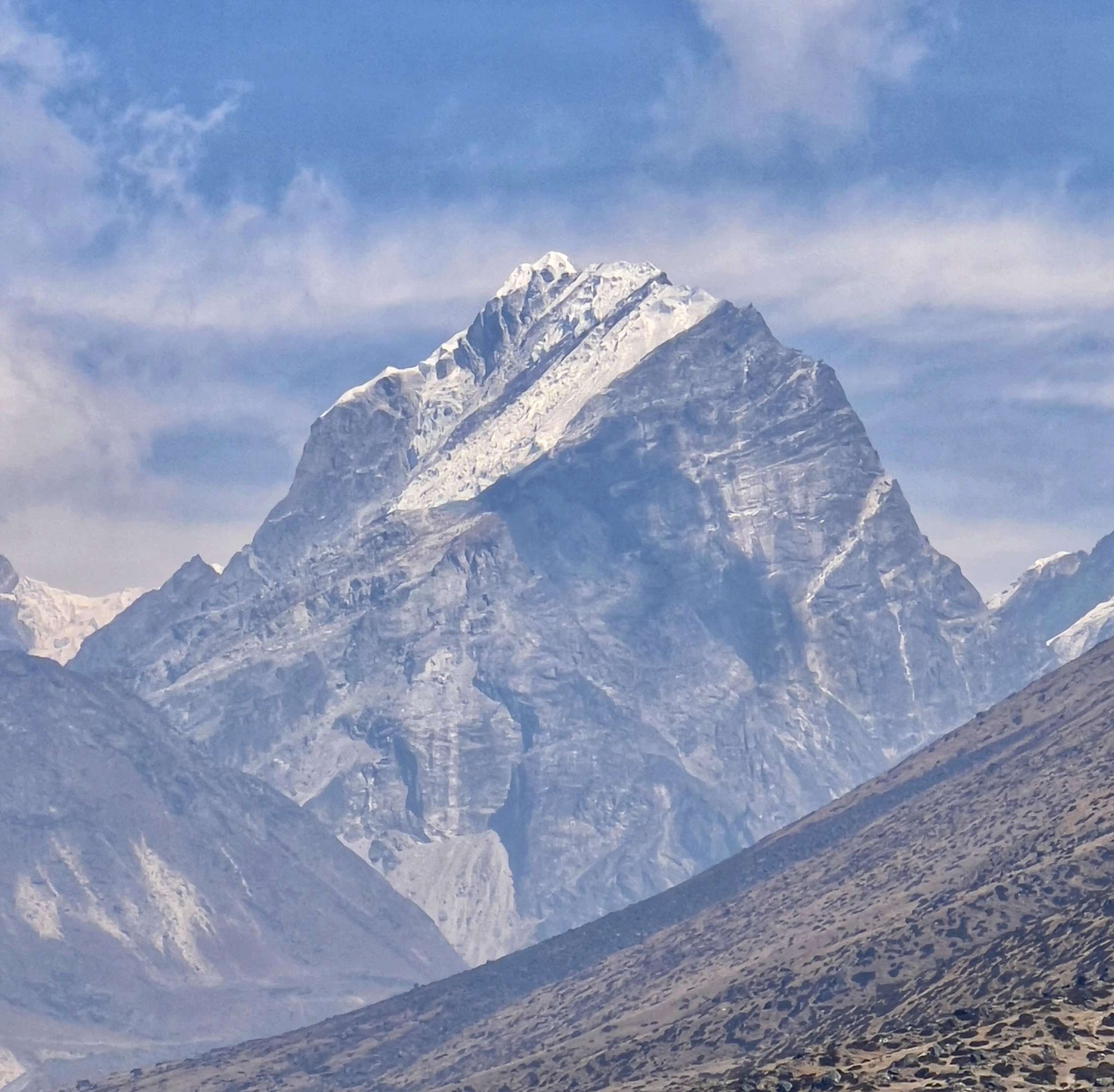
Via Lukla, Namche Bazaar, Tengboche and Dingboche, the route first leads to Everest Base Camp at 5,364 metres and to the Kala Patthar viewpoint at 5,545 metres.
The trekking days and two targeted acclimatisation phases prepare you for the next step: the ascent of Lobuche East at 6,119 metres.
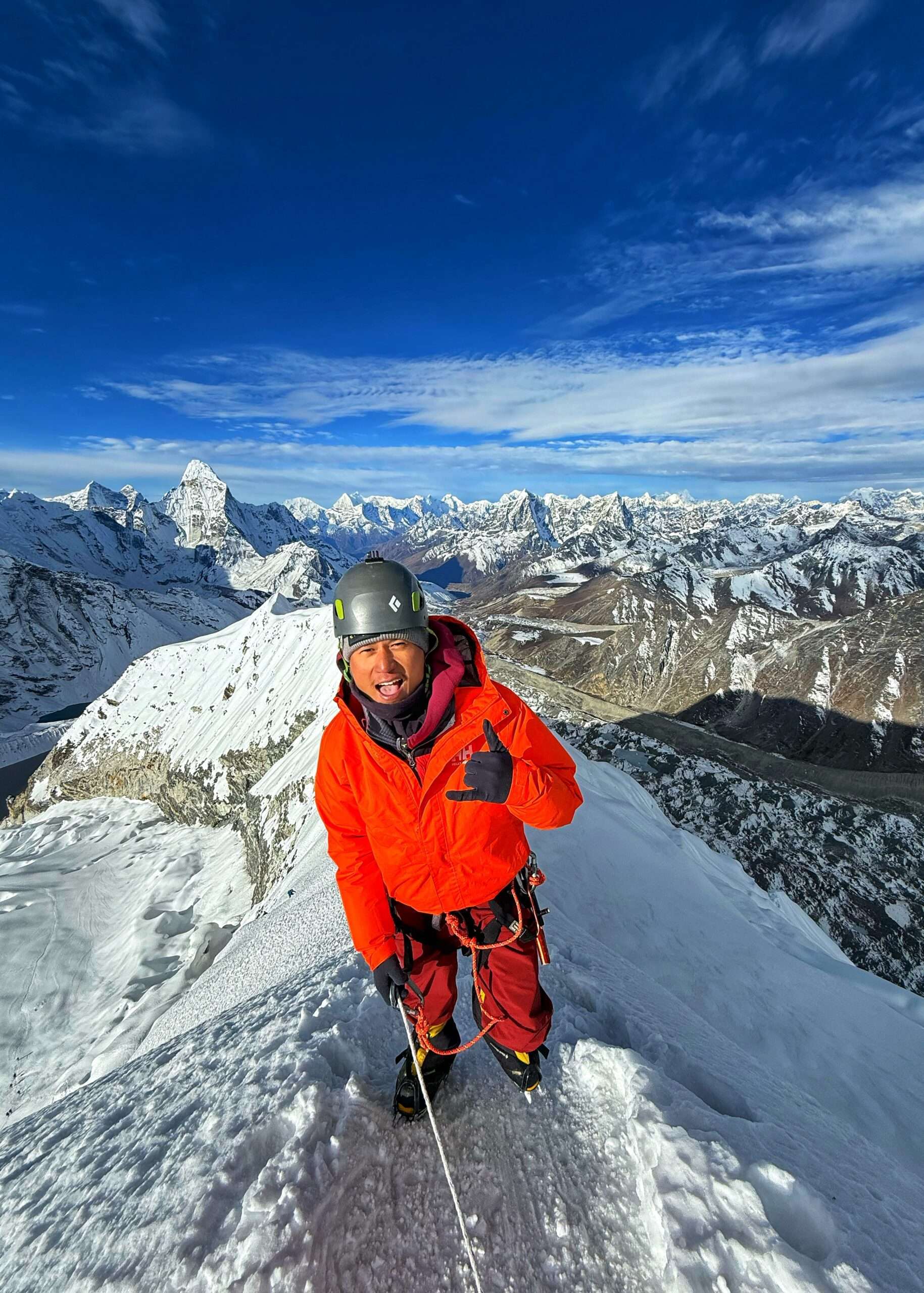
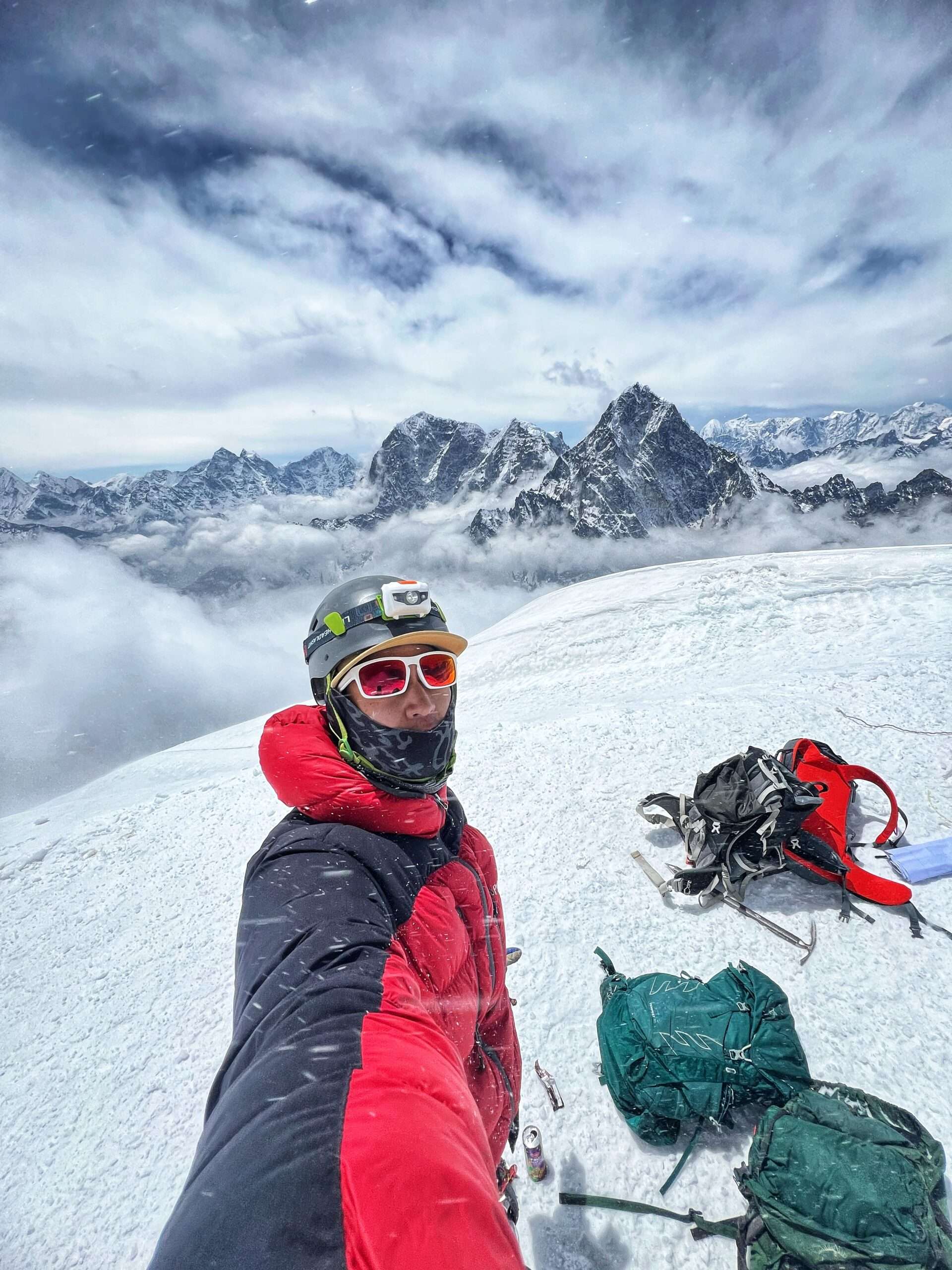
From High Camp, summit day leads across snow, glacier terrain and steeper sections where fixed ropes, crampons, an ice axe and Jumar are used.
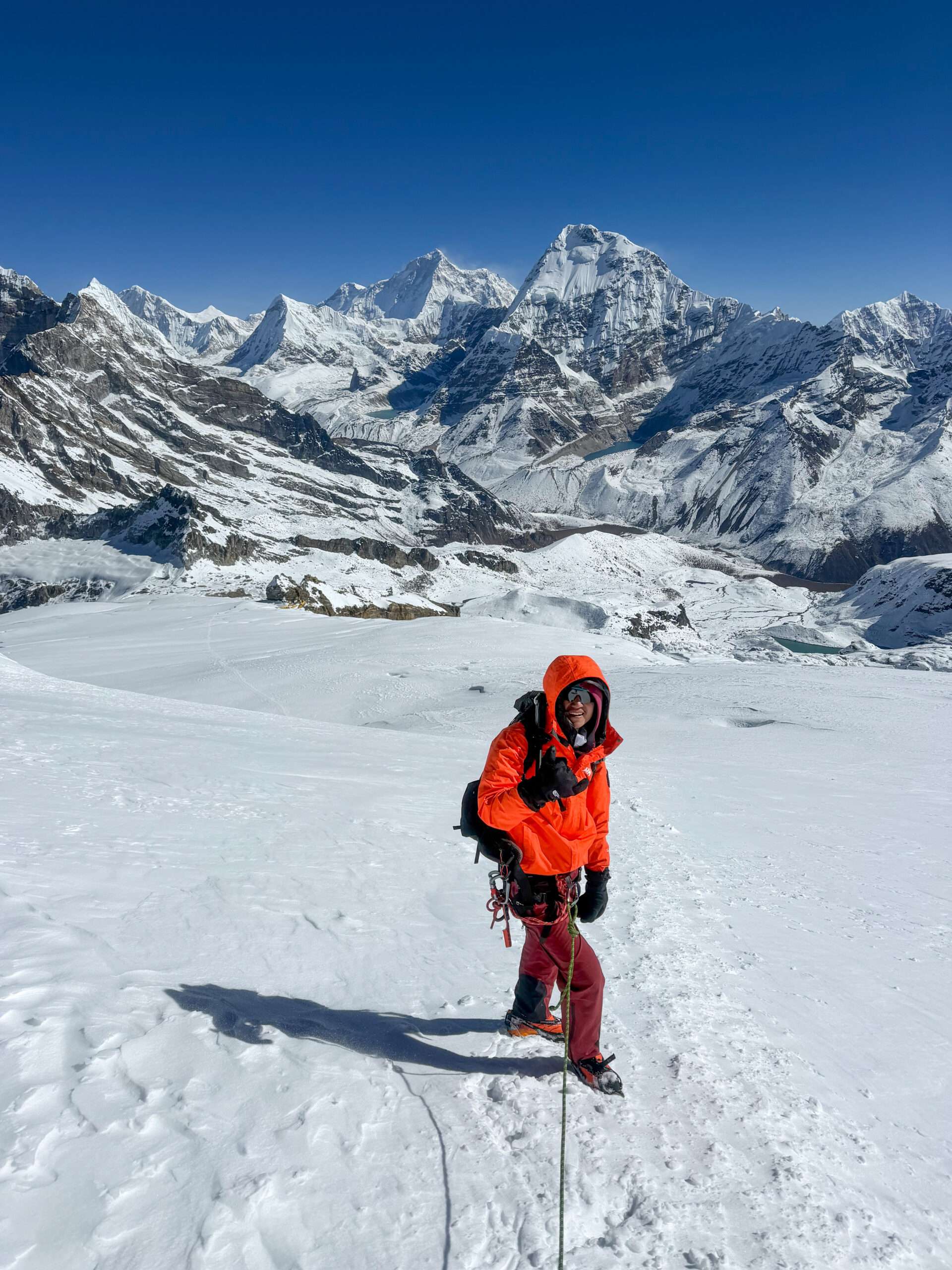
What to expect on this journey.
REQUIREMENTS
For anyone ready to take the next step beyond trekking.
Lobuche East is suitable for fit trekkers and mountaineers who already have experience of multi-day tours at high altitude and want to climb their first or next 6,000-metre peak.
Previous technical experience is helpful but does not need to be at expedition level. What matters is excellent fitness, sure-footedness and a willingness to learn how to use the technical equipment safely.
For guests for whom Lobuche East is their first 6,000-metre peak, basic climbing training in Kathmandu is planned before departure into the mountains.
At High Camp, further practical preparation follows with fixed ropes, Jumar and crampons.
ROUTE & CAMPS
Step by step to 6,119 metres.
KATHMANDU
approx. 1,400 m
Briefing, preparation and, for a first 6,000-metre peak, basic climbing training.
LUKLA
2,845 m
Starting point of the trekking route.
NAMCHE BAZAAR
3,440 m
First important acclimatisation phase.
DINGBOCHE
4,410 m
Second acclimatisation phase.
EVEREST BASE CAMP
5,364 m
One of the major trekking objectives of this journey.
KALA PATTHAR
5,545 m
Highest trekking point before the actual peak-climbing phase.
LOBUCHE HIGH CAMP
approx. 5,400 m
Preparation and final technical exercises before the summit ascent.
LOBUCHE EAST SUMMIT
6,119 m
Highest point of the journey.
ITINERARY
19 days from the Khumbu trek to the summit.
Phase 1
ARRIVAL & PREPARATION
Arrival in Kathmandu, briefing, equipment check and preparation.
For participants planning their first 6,000-metre peak, basic climbing training is included. The journey then continues towards Ramechhap.
Phase 2
LUKLA, NAMCHE & ACCLIMATISATION
Flight to Lukla and trek via Phakding to Namche Bazaar.
An acclimatisation day in Namche supports the first stage of altitude adaptation. The route then continues via Tengboche to Dingboche, where another acclimatisation day follows.

Phase 3
EVEREST BASE CAMP & KALA PATTHAR
From Dingboche, the route leads to Lobuche and onward via Gorak Shep to Everest Base Camp.
The following morning, Kala Patthar is on the programme before the route returns to Lobuche.
Phase 4
HIGH CAMP & LOBUCHE EAST
Ascent to High Camp at around 5,400 metres.
The final technical preparation with fixed ropes, Jumar and crampons takes place here.
Summit day begins early in the night. After the ascent to 6,119 metres, the long descent towards Pheriche follows.
An additional reserve day remains planned for weather or a second summit attempt.
Phase 5
RETURN & KATHMANDU
Descent via Namche back to Lukla, return flight via Ramechhap or, depending on current flight operations, directly towards Kathmandu, followed by final departure.
Note
The exact itinerary may be adjusted due to weather, flight conditions, altitude adaptation or mountain conditions.
EVACUATION & EMERGENCY
When descending on your own is no longer enough.
Weather, snow conditions, altitude, physical condition and other factors can change a tour at any time.
On the mountain, the guide in charge decides whether an ascent can continue under the current conditions or whether turning back is necessary.
These decisions matter before something goes wrong, not only after. Good guiding means assessing situations early, communicating openly and changing a plan when necessary.
Turning back responsibly is not a failure. It can be the right decision for a safe return.
WHAT IS INCLUDED?
Included in your Everest & Lhotse Expedition.
Permits & Administration
- Sagarmatha National Park Permit
- local Khumbu Pasang Lhamu Rural Municipality Permit
- required climbing permit for Lobuche East
- government fees, taxes and administrative processing
Transport & Flights
- airport transfers in Kathmandu
- return flight to Lukla or, seasonally, via Ramechhap
- domestic flight fees and the designated baggage-handling fees
- required transfers according to the itinerary
Accommodation & Meals
- stay in Kathmandu totalling four days according to the current itinerary
- local accommodation during the trek on a twin-sharing basis
- tent accommodation during the high-camp and summit phase
- breakfast, lunch and dinner during trekking and climbing days according to the programme
- tea or coffee with the included meals
- 1 litre of drinking water per person per trekking day according to the standard package
- fresh fruit after selected dinners according to the programme
- welcome and farewell dinner with the team
Guides & Support
- experienced English-speaking trekking guide
- experienced climbing guide for the technical summit phase
- technical preparation before the summit attempt
- support on fixed ropes and with the shared technical equipment designated for the tour
- one porter for every two guests
Additional Services
- waterproof trekking duffel for the main luggage
- Sky Ridge shirt
- completion certificate
Staff Welfare
- wages for the guides and porters deployed
- team insurance
- meals and accommodation
- necessary equipment for the staff deployed
WHAT IS NOT INCLUDED?
Not included in the trip price.
Documents & Insurance
- Nepal visa
- personal travel, mountaineering and rescue insurance
- personal medication, vaccinations and medical treatment
Personal Equipment
- personal trekking and climbing equipment
- personal clothing and individual equipment items
- additional or rented equipment unless expressly agreed
Kathmandu & Personal Expenses
- meals in Kathmandu outside the agreed services
- additional hotel nights outside the itinerary
- single-room supplement
- additional drinks and snacks
- personal purchases and other personal expenses
On the Trail & Communication
- hot showers during the trek
- Wi-Fi and internet
- charging fees for electronic devices
- additional or excess baggage on domestic flights
Tips & Additional Costs
- personal tips
- summit bonus for the climbing guide
- additional costs resulting from weather-related flight delays or necessary programme changes
- rescue and evacuation costs if these are not, or not yet, covered by the insurance
- rescue costs that may need to be advanced if insurance authorisation is delayed
PREPARED FOR YOUR 6,000-METRE PEAK
Technical equipment is part of the summit.
In addition to complete trekking equipment, you need personal mountaineering equipment for Lobuche East for snow, glacier terrain and fixed-rope sections.
If Lobuche East is your first 6,000-metre peak, Sky Ridge includes basic climbing training in Kathmandu before you depart for the mountains. Before the summit attempt, the use of crampons, fixed ropes and a Jumar / ascender is practised again at High Camp. The flyer specifically describes exercises with crampons, fixed ropes and an ice axe there.
Technical Equipment
- suitable mountaineering boots
- crampons
- climbing harness
- helmet
- Jumar / ascender
- belay and abseil device
- safety lanyards
- suitable carabiners
- Prusik loops
Clothing
- warm down jacket for high altitude
- waterproof outer jacket and trousers
- insulating mid-layers
- base layers
- warm gloves
- very warm overmitts for summit day
- warm hat and face protection
Sleeping & Camp
- sufficiently warm sleeping bag for the high-camp phase
- insulated sleeping mat
- warm clothing for camp
Additional Personal Equipment
- glacier glasses
- ski goggles
- headlamp and spare batteries
- water bottle and thermos flask
- sun protection and lip balm
- personal first-aid equipment
- personal medication as agreed with your doctor
- daypack
- documents and proof of insurance
Training
- basic climbing training in Kathmandu for participants planning their first 6,000-metre peak
- practical exercises with crampons, fixed ropes and Jumar before the summit ascent
- final equipment check before the technical summit phase
ACCLIMATISATION & SAFETY
Altitude is built up step by step.
The route includes two dedicated acclimatisation days as well as additional altitude exposure through Everest Base Camp and Kala Patthar.
Despite careful planning, people respond differently to high altitude. Daily objectives, pace or the summit attempt can therefore be adjusted at any time.
Weather, physical condition and mountain conditions determine whether the ascent can continue.
Summit success cannot be guaranteed.
Supplementary oxygen is not normally carried as personal summit equipment on 6,000-metre peak-climbing trips. Emergency oxygen is available at designated camps if required. If a guest specifically requests supplementary oxygen for the climb, Sky Ridge can arrange it separately in advance.
Insurance for peak climbing above 6,000 metres.
Travel and rescue insurance is mandatory for this journey.
The policy must explicitly cover peak climbing above 6,000 metres and at least up to the planned summit altitude of 6,119 metres.
In addition, it should include emergency medical treatment, rescue and evacuation, as well as helicopter rescue within the limits of actual operating conditions.
Proof of insurance must be provided before the trip begins.
PLANNING & BOOKING
Ready for your Lobuche Peak?
STANDARD PRICE: PRICE ON REQUEST
Contact Sky Ridge for the current price and availability for departures on 10 April and 20 April 2027.
Before booking, Purna discusses your previous trekking and mountaineering experience with you and clarifies what preparation makes sense for you.
Booking
Peak-climbing trips require a deposit of 30% of the trip price. The remaining balance must be paid no later than 10 days before arrival in Nepal.
YOUR EXPEDITION MAKES A GREATER IMPACT
Give something back with every peak-climbing day.
For every booked expedition day, USD 10 from the trip price already paid goes to the Infinity Help Foundation – at no additional cost to you.
The Foundation supports, among other things, educational projects for children in Ramche, agricultural development and projects to improve local healthcare structures.

FAQ
Are Everest Base Camp and Kala Patthar included?
Yes. Both are part of the 19-day itinerary and at the same time support acclimatisation before the Lobuche summit.
Is Lobuche Peak suitable for my first 6,000-metre peak?
For fit trekkers with good preparation, Lobuche East can be a suitable introduction to 6,000-metre peak climbing. Before booking, Purna assesses your experience and recommends the appropriate preparation.
Is there climbing training?
Yes. For a first 6,000-metre peak, basic training in Kathmandu is planned. In addition, technical procedures are practised at High Camp before the summit.
How high is Lobuche East?
The summit is at 6,119 metres.
How large is the group?
The group is limited to a maximum of 11 guests.
Is there a reserve day?
Yes. An additional day is planned for weather or a possible second summit attempt.
Can the summit be guaranteed?
No. Weather, altitude adaptation, mountain conditions and each participant's physical condition determine whether a summit attempt is possible.