EXPEDITION · 10 APRIL – 30 MAY 2027
Lhotse Expedition
A demanding 8,000-metre expedition through the Khumbu Icefall, Western Cwm and Lhotse Face into the steep Lhotse Couloir – for experienced high-altitude mountaineers with strong technical skills.
STANDARD PRICE: USD 27,000
Duration
55 days
Max. Altitude
8,516 m
Difficulty
Difficult
Group Size
max. 7 people
Route
South Col Route
Season
Spring
Experience
Previous high-altitude
THE FOURTH-HIGHEST MOUNTAIN IN THE WORLD
The Everest route – with a finale of its own.
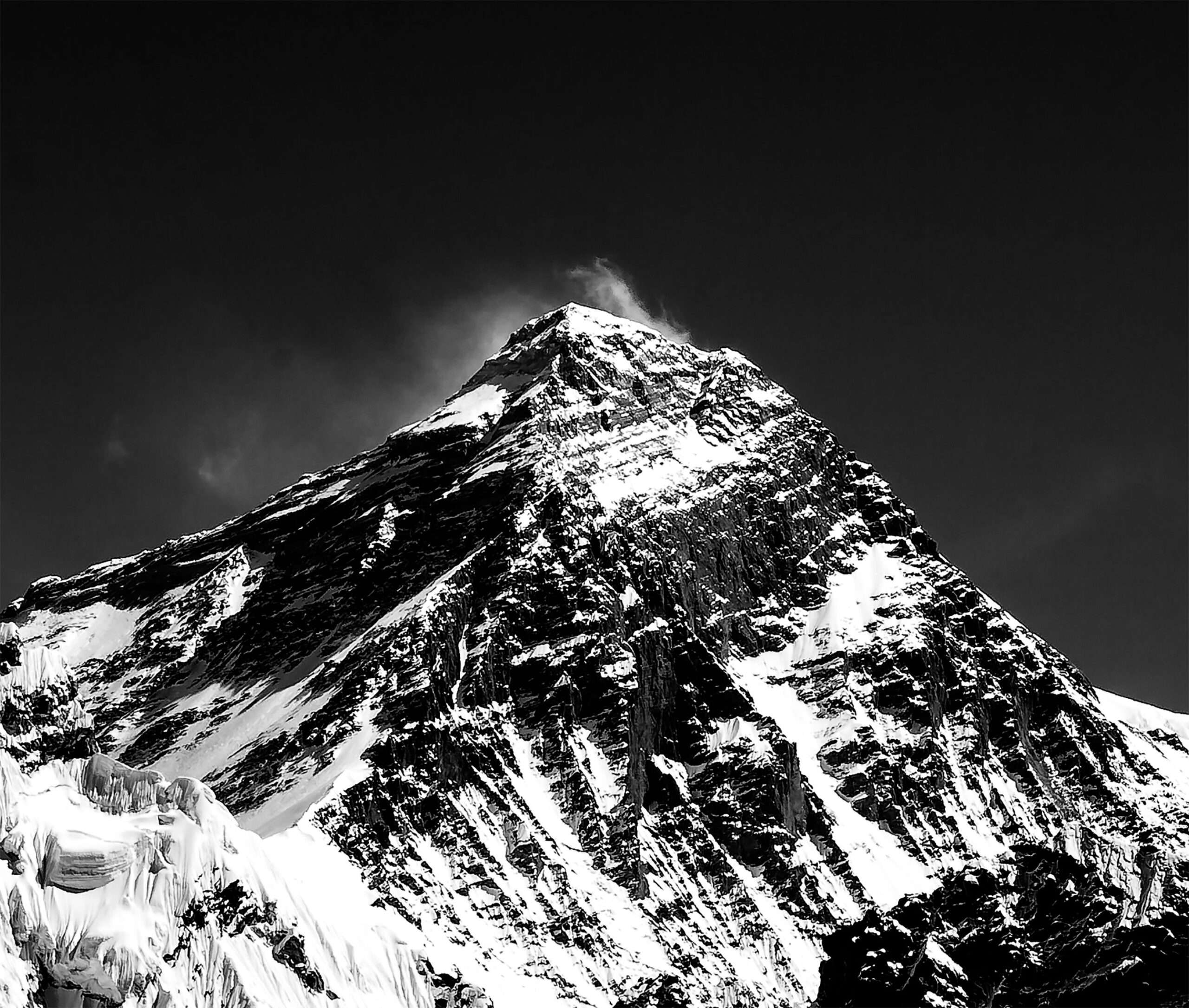
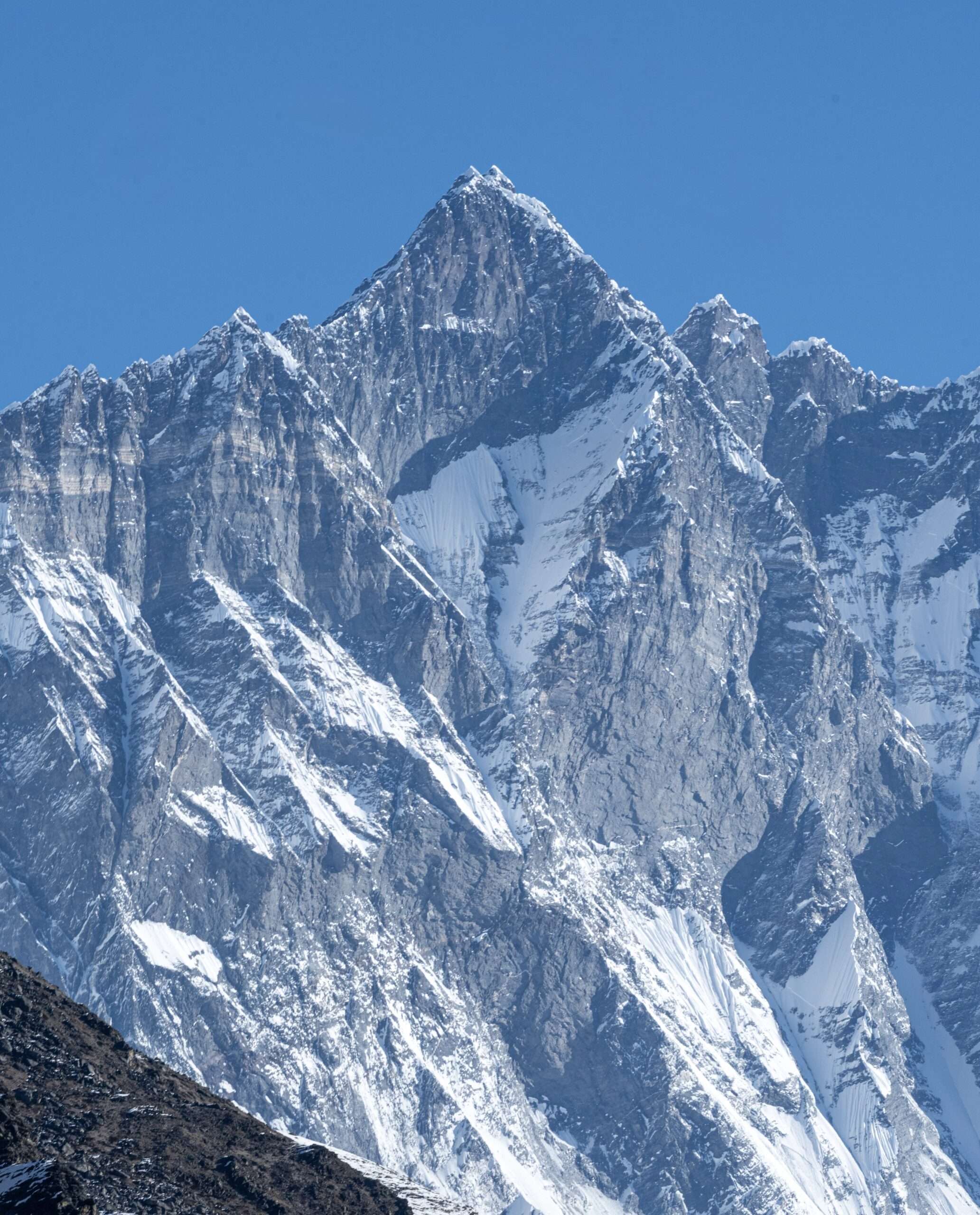
At 8,516 metres, Lhotse is the fourth-highest mountain in the world and is directly connected to the Everest massif.
The expedition initially shares Base Camp and the lower section of the route with Everest. From the Khumbu Icefall, the route leads into the Western Cwm and continues up the steep Lhotse Face to the high camps. Only in the upper section does Lhotse reveal its distinct
character: the route branches into the narrow, steep Lhotse Couloir, which leads to the exposed summit.
The combination of extreme altitude, steep fixed-rope terrain and a technically demanding summit ascent makes Lhotse an objective for experienced high-altitude mountaineers who already have a solid foundation at altitude.
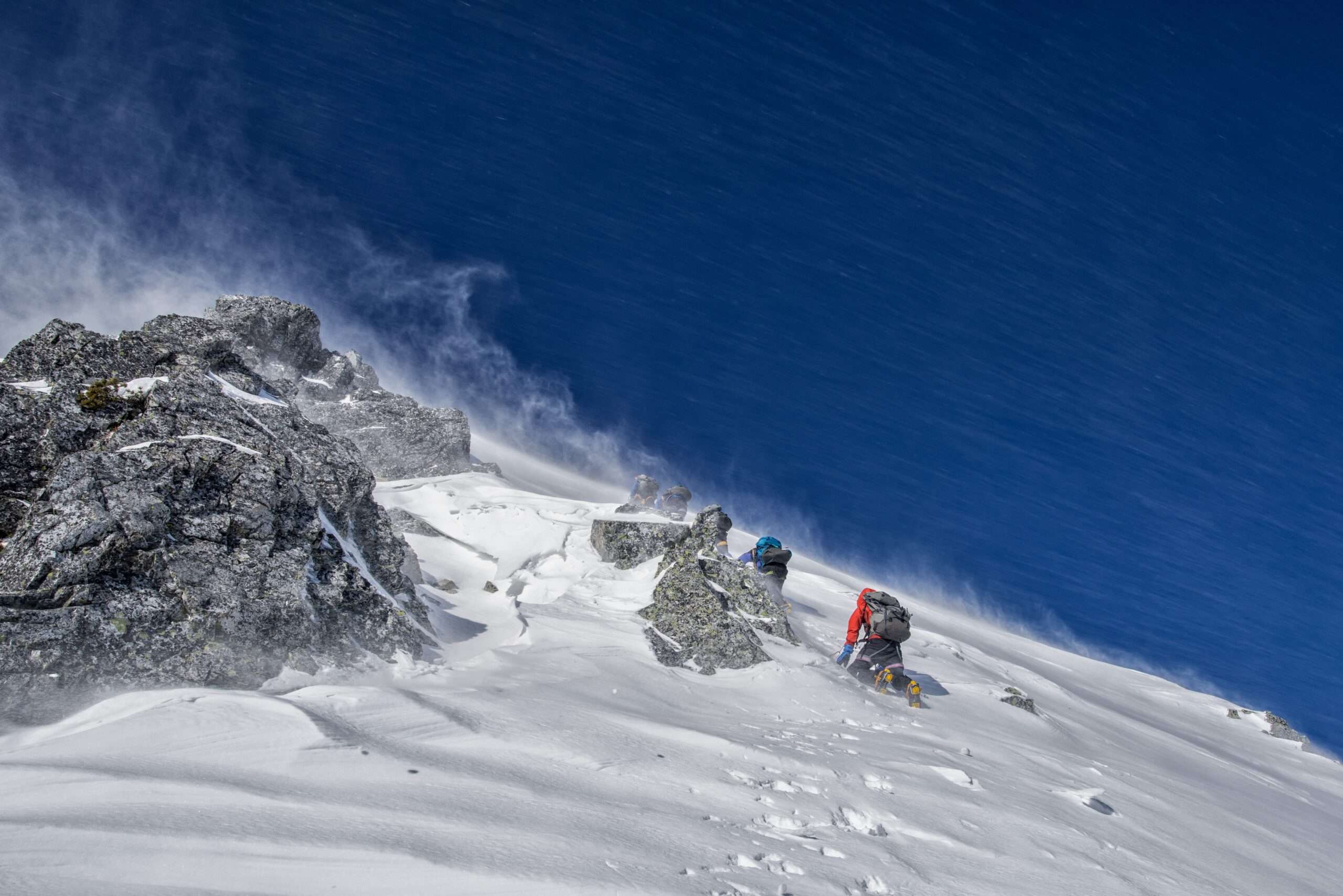
What to expect on this expedition.
REQUIREMENTS
Lhotse demands high-altitude experience.
This expedition is designed for experienced mountaineers who are already familiar with high altitude, demanding climbing days and technical equipment.
The ascent repeatedly follows fixed ropes across glacier and ice terrain and, particularly on the Lhotse Face and in the upper couloir, requires secure crampon technique as well as endurance and concentration at extreme altitude.
Before booking, Sky Ridge discusses your previous mountaineering and high-altitude experience with you and assesses together with you whether Lhotse matches your current level.
ROUTE & CAMPS
Via the South Col Route to the Lhotse Couloir.
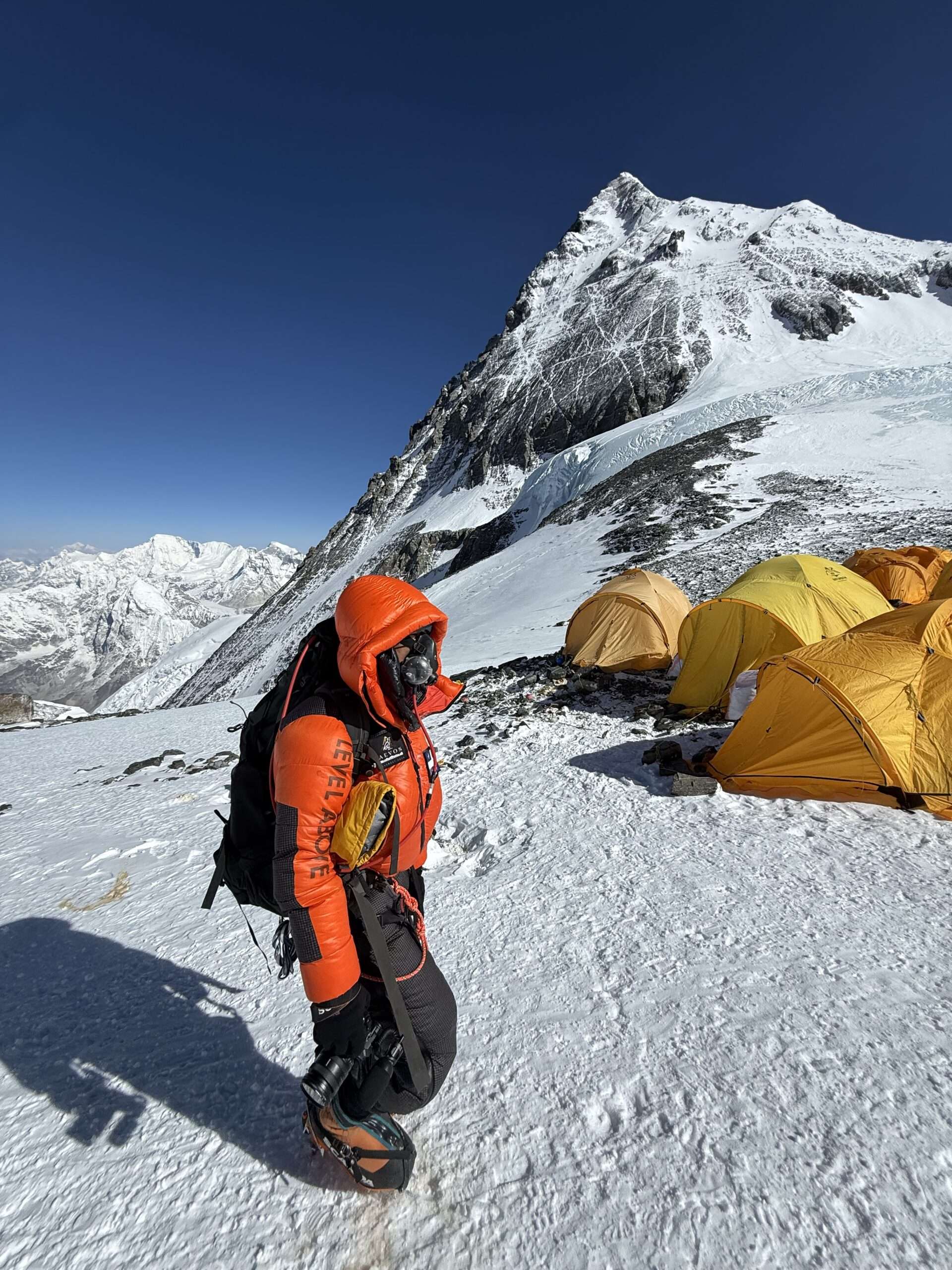
From the shared Everest/Lhotse Base Camp, the route leads through the Khumbu Icefall into the Western Cwm and continues up the Lhotse Face. In the upper section, the ascent branches towards Lhotse and follows the steep Lhotse Couloir to the summit.
BASE CAMP
5,364 m
Shared Everest/Lhotse Base Camp.
CAMP 1
6,065 m
Above the Khumbu Icefall.
CAMP 2 / ADVANCED BASE CAMP
6,400 m
In the Western Cwm.
CAMP 3
7,150 m
On the Lhotse Face.
CAMP 4
7,850 m
Final high camp before the upper summit section.
SUMMIT
8,516 m
Ascent through the steep Lhotse Couloir.
ITINERARY
Your Lhotse Expedition in stages.
Phase 1
ARRIVAL & PREPARATION
Arrival in Kathmandu, briefing, permits, gear check and expedition preparation.
Phase 2
APPROACH & ACCLIMATISATION
Flight to Lukla and trek through Namche, Tengboche and Dingboche. In the current programme, Lobuche Peak or Island Peak can be chosen for additional acclimatisation before reaching Everest/Lhotse Base Camp.
Phase 3
PUJA & BASE CAMP TRAINING
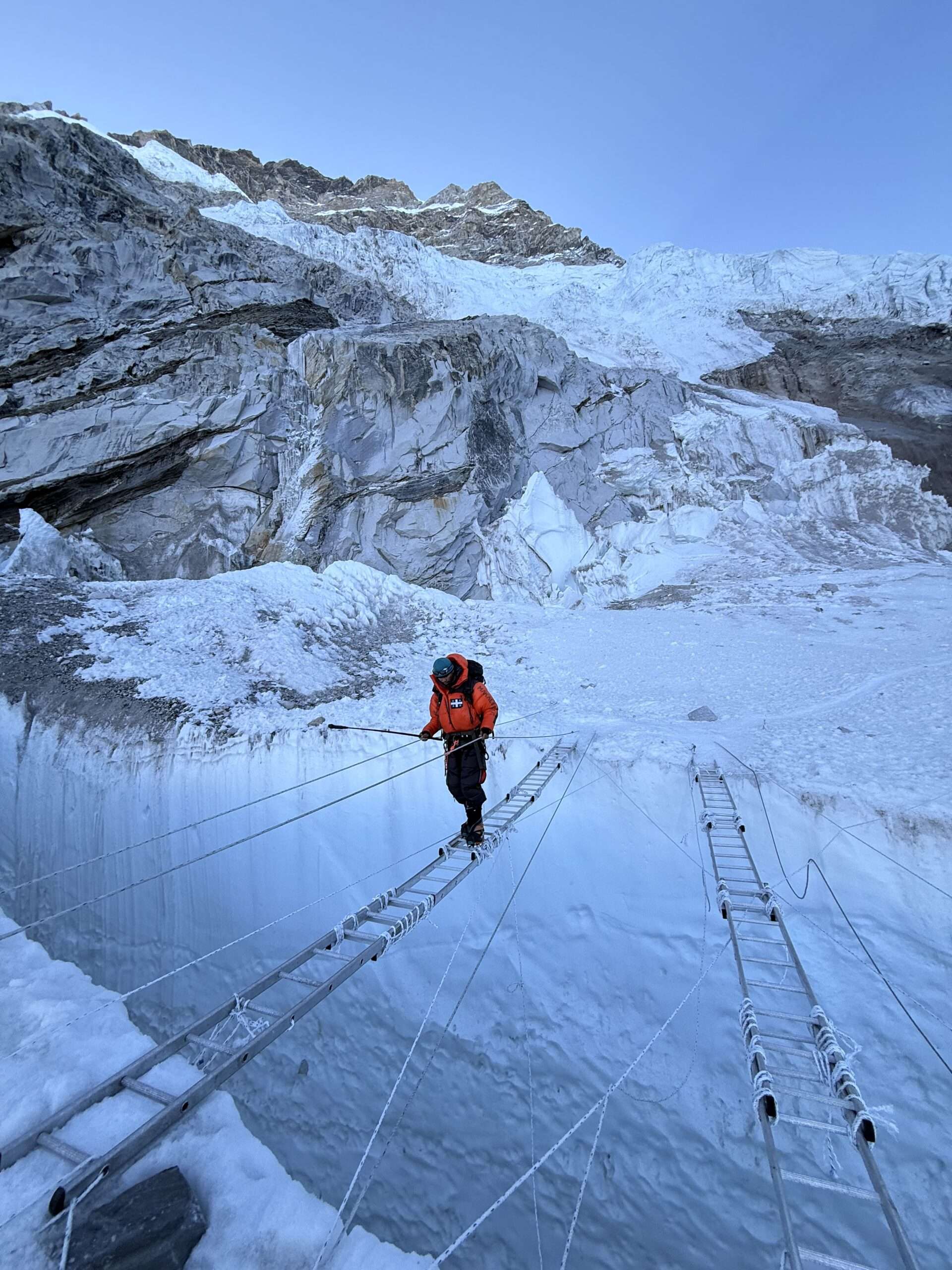
Puja ceremony plus training for ladders, the Khumbu Icefall and fixed ropes.

Phase 4
ROTATION 1
Through the Khumbu Icefall to Camp 1 and Camp 2, nights at altitude and subsequent return to Base Camp.
Phase 5
ROTATION 2
A second ascent via Camp 2 to Camp 3 on the Lhotse Face, followed by descent for recovery.
Phase 6
RECOVERY & WEATHER WINDOW
Recovery at lower altitude and monitoring weather developments.
Phase 7
SUMMIT PUSH
Base Camp → Camp 2 → Camp 3 → Camp 4 → Lhotse Couloir → Summit. Descent afterwards.
Phase 8
DESCENT & RETURN
Dismantling camps, then trekking and flying back to Kathmandu.
[Note]
The itinerary is an approximate 55-day framework. Rotations, high camps and summit days are adjusted according to weather, conditions and decisions by the expedition leadership.
EVACUATION & EMERGENCY
When descending on your own is no longer enough.
Weather, snow conditions, altitude, physical condition and other factors can change a tour at any time.
On the mountain, the guide in charge decides whether an ascent can continue under the current conditions or whether turning back is necessary.
These decisions matter before something goes wrong, not only after. Good guiding means assessing situations early, communicating openly and changing a plan when necessary.
Turning back responsibly is not a failure. It can be the right decision for a safe return.
WHAT IS INCLUDED?
Included in your Lhotse Expedition.
Permits & Administration
- Lhotse Climbing Permit and applicable royalties
- Sagarmatha National Park Permit
- local permits
- Liaison Officer
- Garbage Deposit and administrative fees
Transport & Logistics
- domestic flight Kathmandu or Ramechhap – Lukla and return
- trek to and from Base Camp
- full Base Camp service
- high-camp tents
- fuel and expedition logistics
Accommodation & Meals
- hotel and lodge accommodation during arrival and approach according to the itinerary
- tent accommodation at Base Camp and in the high camps
- meals at Base Camp and in the high camps
Climbing Support
- 1:1 Climbing Sherpa per participant
- 3 oxygen cylinders per participant in the standard package
- additional oxygen if required, at extra cost or by arrangement
- mask and regulator
- share of fixed-rope and route-fixing costs
- Icefall Doctor fees
- shared technical expedition equipment such as ropes, ice screws and snow bars
Additional Services
- professional weather forecasts for the summit window
- duffel bag
- official Summit Certificate
- insurance, meals and equipment for the expedition team as stated in the offer
WHAT IS NOT INCLUDED?
Not included in the trip price.
Documents & Insurance
- international flights
- Nepal visa
- personal expedition and rescue insurance
- personal medication, vaccinations and medical treatment
Prsonal Equipment & Additional Services
- personal high-altitude and climbing equipment
- additional oxygen beyond the 3 cylinders included in the package
- additional personal Sherpa services
- additional high-altitude porters
Kathmandu & Communication
- additional hotel nights, meals and sightseeing in Kathmandu outside the programme
- personal satellite phone, Wi-Fi and charging costs
Optional Transport
- optional helicopter transfers
Tips & Rescue Costs
- summit bonus for the personal Climbing Sherpa
- tips for the Base Camp and support team
- rescue costs that may need to be advanced if insurance authorisation is delayed
PREPARATION
Equipment for an 8,000-metre mountain.
Lhotse requires complete high-altitude equipment for extreme cold, steep fixed-rope terrain and long periods at high altitude. For Lhotse, Sky Ridge requires the same full 8,000-metre equipment standard as for Everest. Before departure, you receive a detailed equipment list and clarify with Sky Ridge which personal equipment you must bring yourself.
Technical Equipment
- 8,000-metre double boots with overboots
- automatic crampons
- ice axe
- trekking or ski poles
- climbing harness and helmet
- Jumar / ascender
- belay and abseil device
- two safety lanyards / cow's tails
- locking and standard carabiners
- Prusik loops and slings
Clothing
- 8,000-metre down suit
- expedition down jacket
- waterproof hard-shell jacket and trousers
- insulating midlayers and baselayers
- warm gloves
- Summit Mitts
- balaclava, beanie and buff
Sleeping & Camp
- expedition sleeping bag rated to approximately –40 °C
- two insulated sleeping mats
- down booties / camp shoes
- warm expedition socks
- urine bottle for the high camps
Additional Personal Equipment
- glacier glasses and ski goggles
- two headlamps and spare batteries
- summit pack / daypack
- insulated drinking bottles and thermos
- sun protection and lip balm
- hand and foot warmers
- personal first-aid kit
- personal medication as agreed with your doctor
- passport and proof of insurance
- cash
- power bank or solar charger
- personal snacks and camera
ACCLIMATISATION & SAFETY
Step by step into extreme altitude.
After the approach through the Everest region, training and acclimatisation days at Base Camp are followed by several rotations to the high camps.
The first rotation leads through the Khumbu Icefall to Camp 1 and Camp 2. On a further rotation, the team reaches Camp 3 on the Lhotse Face before returning to lower altitude for recovery.
Only after these phases, and with a suitable weather window, does the final summit attempt begin.
No summit can be guaranteed. Weather, conditions, acclimatisation and participants' physical state influence every decision. The guide in charge decides whether climbing can continue or whether the plan must be adjusted.
Insurance for 8,516 metres.
Comprehensive travel, high-altitude and rescue insurance is mandatory for the Lhotse Expedition.
Sky Ridge requires a policy whose altitude and activity cover extends to at least 9,000 metres. It must cover helicopter rescue within the limits of actual rescue conditions, emergency medical treatment in Nepal, evacuation and repatriation or, in the event of death, repatriation of remains.
Proof of insurance must be provided before the expedition begins.
PLANNING & BOOKING
Ready for Lhotse?
STANDARD PRICE: USD 27,000
Contact Sky Ridge for current availability, requirements and all details of the Lhotse Expedition.
Before booking, Purna will discuss your previous high-altitude experience, technical skills and the requirements of this expedition with you.
The standard price includes the services listed in the offer. Additional or extended services may incur extra costs.
Booking
Expeditions require a deposit of 50% of the trip price. The remaining balance must be paid no later than 10 days before arrival in Nepal.
YOUR EXPEDITION MAKES A GREATER IMPACT
Give something back with every expedition day.
For every booked expedition day, USD 10 from the trip price already paid goes to the Infinity Help Foundation – at no additional cost to you.
The Foundation supports, among other things, educational projects for children in Ramche, agricultural development and projects to improve local healthcare structures.
FAQ
What experience do I need for Lhotse?
Lhotse is intended for experienced high-altitude mountaineers. Previous high-altitude experience, excellent fitness and confident use of fixed ropes and technical high-altitude equipment are required.
How does the route differ from Everest?
Everest and Lhotse share Base Camp and much of the lower route through the Khumbu Icefall, Western Cwm and across the Lhotse Face. In the upper section, the Lhotse route branches into the steep Lhotse Couloir.
Is supplementary oxygen used?
Yes. The current Sky Ridge offer includes three oxygen cylinders per participant. Additional oxygen can be arranged at extra cost if required.
How long does the expedition take?
The current programme covers 55 days. The exact itinerary remains flexible depending on weather, acclimatisation and mountain conditions.
Is summit success guaranteed?
No. The summit remains the goal, but weather, conditions and participants' physical state may mean an attempt has to be postponed or abandoned.
How large is the Lhotse group?
Sky Ridge limits the Lhotse Expedition to a maximum of seven guests. This keeps the group deliberately manageable even on a major 8,000-metre objective.