PEAK CLIMBING · SPRING & AUTUMN 2027
Lobuche East & Island Peak
Two 6,000-metre peaks, Everest Base Camp and Kala Patthar in one journey: a demanding combination for fit trekkers who want to develop their experience from high-altitude trekking towards alpine mountaineering.
Duration
24 days
Max. Altitude
6,119 m / 6,189 m
Difficulty
Difficult
Group Size
7–11 people
Route Lobuche East / Island Peak
Season
Spring and Autumn
Experience
Mountaine-ering basics
TWO SUMMITS. ONE NEXT STEP.
From trekking to alpine mountaineering.
This journey combines two 6,000-metre peaks in the Khumbu region with some of the best-known highlights of the Everest area.
The approach follows the classic route through Namche Bazaar, Tengboche and Dingboche and also includes Everest Base Camp and Kala Patthar. Gradual altitude gain prepares the body for the two summit objectives that follow.
The journey then continues into the Imja Valley, where Island Peak at 6,189 metres provides the second summit objective.
Glacier sections, crampons, fixed ropes and ascenders make this combination a strong next step for fit trekkers who want to develop their experience towards alpine high-altitude mountaineering.
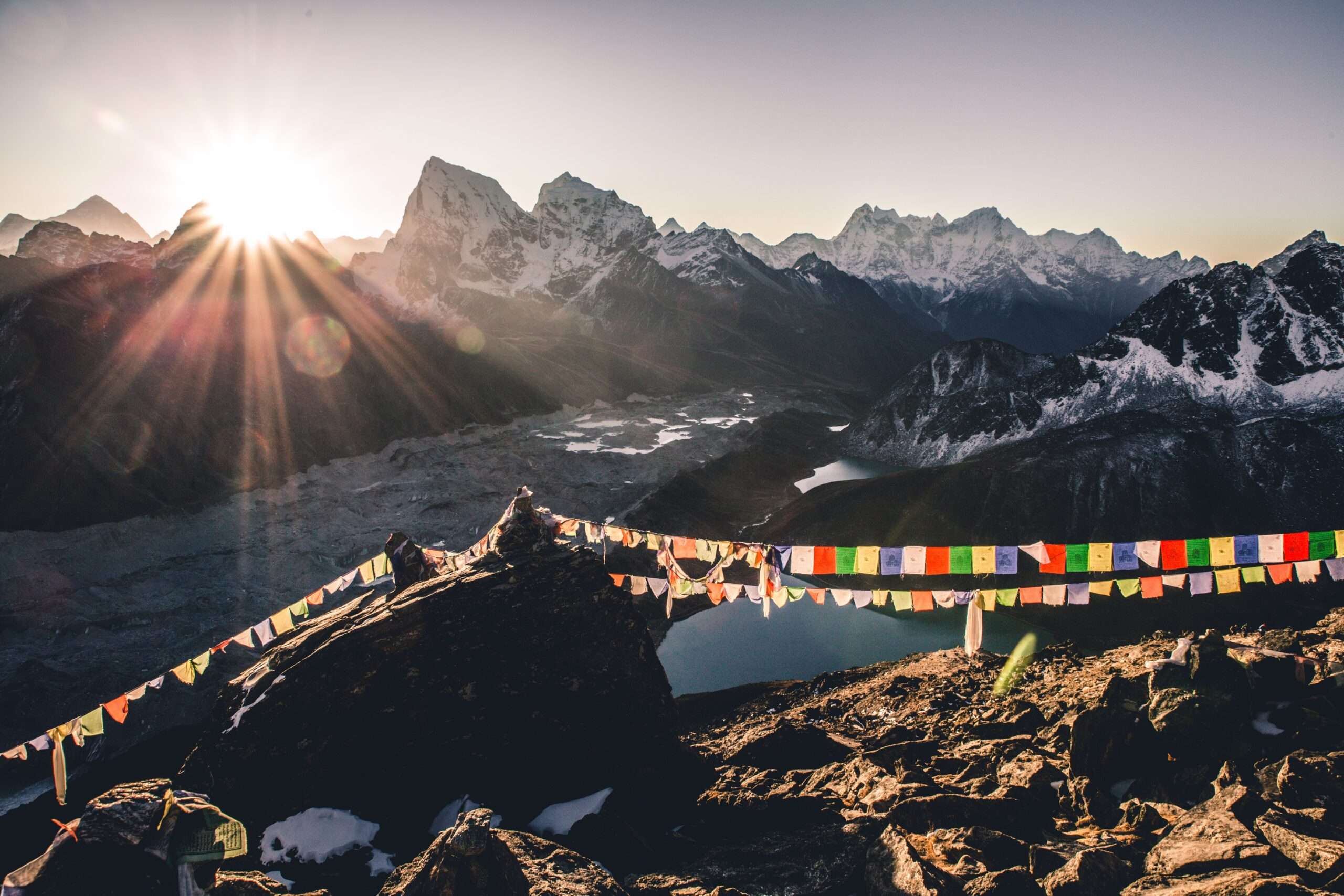
What to expect on this journey.
REQUIREMENTS
Ready to take the step beyond trekking?
The journey is designed for fit trekkers and aspiring mountaineers who already have experience on longer high-altitude tours or specifically want to make the transition to alpine mountaineering.
Basic technical skills are required for both summits. The programme includes training phases for fixed ropes, ascenders and crampons. Summit days are long and require endurance, sure-footedness and concentration at high altitude.
Before booking, Sky Ridge discusses your previous experience with you and clarifies whether the tour fits your next step.
ROUTE & CAMPS
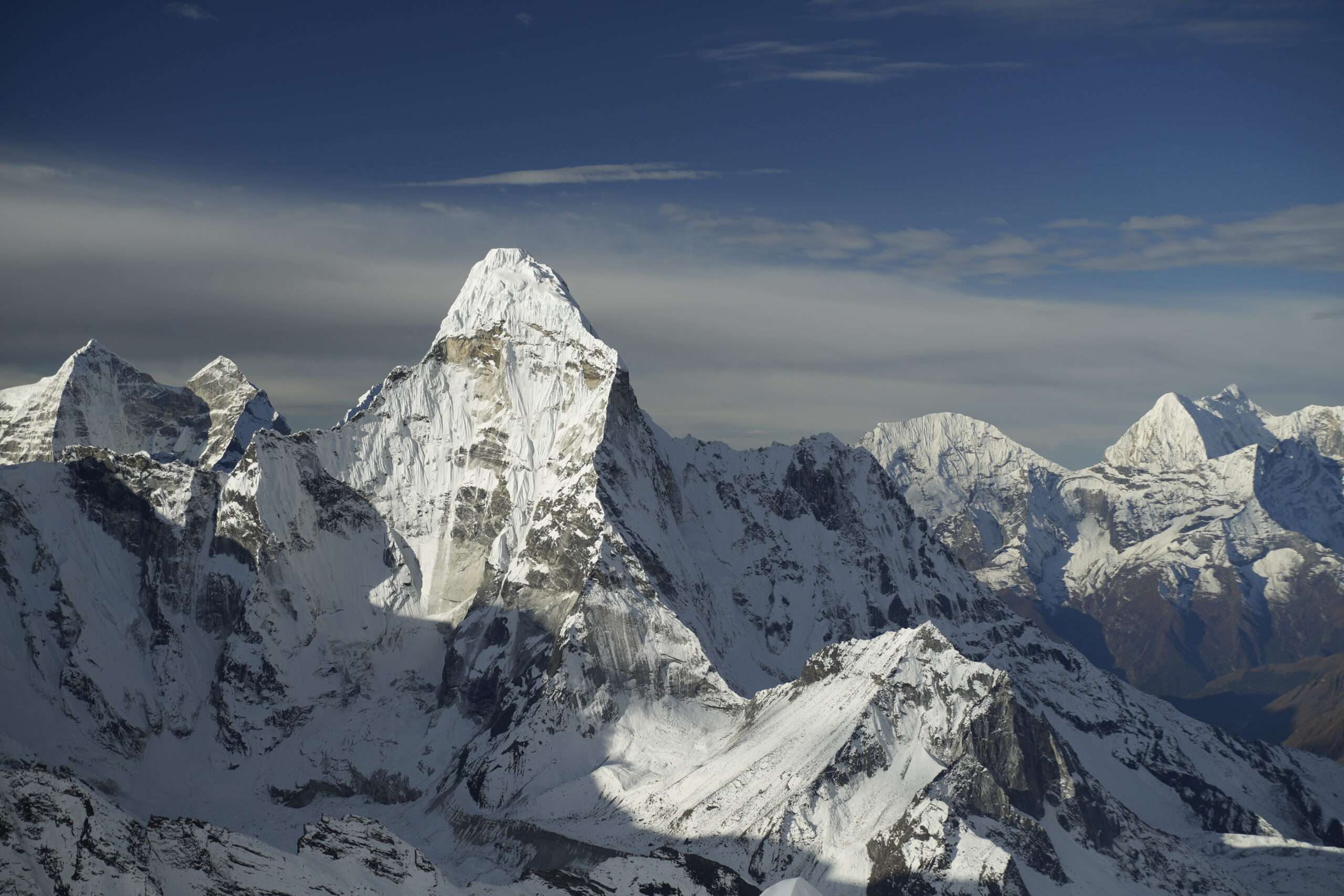
Everest Base Camp and two 6,000-metre peaks.
The journey first leads through the Khumbu region, combining acclimatisation with Everest Base Camp and Kala Patthar. The first technical climbing phase on Lobuche East then begins.
After the summit attempt, the team descends again towards Dingboche and continues into the Imja Valley via Chhukung to Island Peak Base Camp. There, Island Peak becomes the second summit objective of the journey.
EVEREST BASE CAMP
5,364 m
One of the best-known places in the Everest region and part of the journey.
KALA PATTHAR
5,545 m
Viewpoint overlooking Everest and the surrounding Khumbu massif.
LOBUCHE
4,940 m
Starting point for the first summit phase.
LOBUCHE HIGH CAMP
5,400 m
Preparation and starting point for Lobuche East.
LOBUCHE EAST SUMMIT
6,119 m
First summit objective of the journey.
CHHUKUNG
4,730 m
Starting point for the second climbing phase.
ISLAND PEAK BASE CAMP
5,100 m
Preparation for the second summit.
ISLAND PEAK SUMMIT
6,189 m
Highest point of the journey.
ITINERARY
Your journey in stages.
Phase 1
ARRIVAL & PREPARATION
Arrival in Kathmandu, briefing, equipment check and preparation for the journey.
Phase 2
TREK & ACCLIMATISATION IN THE KHUMBU
Flight to Lukla and gradual approach through the Everest region via well-known places such as Namche Bazaar, Tengboche and Dingboche.
Phase 3
EVEREST BASE CAMP & KALA PATTHAR
During acclimatisation, Everest Base Camp and Kala Patthar are part of the itinerary before the technical summit phases begin.
Phase 4
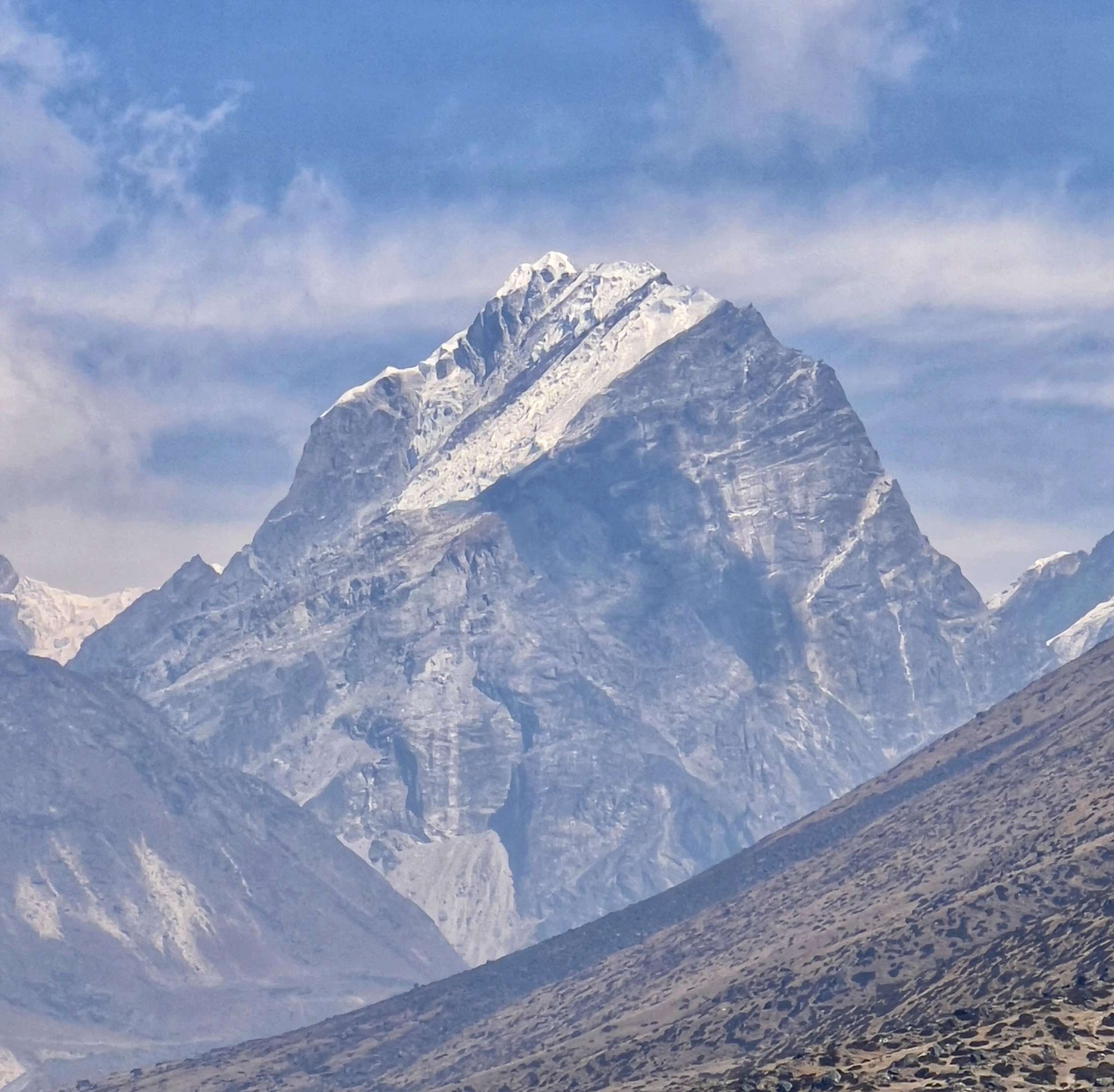
LOBUCHE EAST
Ascent to Lobuche High Camp, technical preparation and summit attempt on Lobuche East at 6,119 metres.
Phase 5
TRANSFER TO THE IMJA VALLEY
After the first summit, the journey continues via Dingboche and Chhukung towards Island Peak Base Camp.
Phase 6
ISLAND PEAK
Preparation at Base Camp and final summit attempt on Island Peak at 6,189 metres.
Phase 7
DESCENT & RETURN
Return through the Khumbu region to Lukla, followed by the flight back to Kathmandu.
Note
The Sky Ridge programme covers 24 days and includes reserve days for weather and conditions. The exact daily itinerary may be adjusted accordingly.
EVACUATION & EMERGENCY
When descending on your own is no longer enough.
Weather, snow conditions, altitude, physical condition and other factors can change a tour at any time.
On the mountain, the guide in charge decides whether an ascent can continue under the current conditions or whether turning back is necessary.
These decisions matter before something goes wrong, not only after. Good guiding means assessing situations early, communicating openly and changing a plan when necessary.
Turning back responsibly is not a failure. It can be the right decision for a safe return.
WHAT IS INCLUDED?
Included in your Everest & Lhotse Expedition.
Permits & Administration
- Sagarmatha National Park Permit
- Peak Permits
- local permits
- government fees and administrative processing
Transport & Flights
- airport transfers in Kathmandu
- domestic flights Kathmandu or Ramechhap/Manthali – Lukla and return
- domestic flight fees and baggage handling according to the itinerary
Accommodation & Meals
- 3 hotel nights in Kathmandu in a twin room with breakfast
- lodge/teahouse accommodation along the trekking route
- tent accommodation during the relevant Base Camp/high-camp phases
- two reserve days for weather and conditions within the 24-day programme
- if returning to Kathmandu earlier, a maximum of 3 hotel nights in Kathmandu remains included in the standard price
- three main meals during trekking days
- 1 litre of drinking water per trekking day
- tea or coffee with the included meals
- welcome and farewell dinner
Guides & Support
- experienced Trekking Guide for the approach and trip organisation
- experienced Climbing Guide for the technical summit sections
- 1:1 guide-to-guest ratio during the technical climbing phase
- local porters according to the booked service
- insurance, accommodation, meals and wages for the support team
Additional Services
- 70–80-litre duffel bag
- Sky Ridge shirt
- Trip Completion Certificate
WHAT IS NOT INCLUDED?
Not included in the trip price.
Documents & Insurance
- international flights
- Nepal visa
- personal travel, mountaineering and rescue insurance
- personal medication and medical treatment
Personal Equipment
- personal trekking and climbing equipment
Kathmandu & Trekking
- additional meals in Kathmandu outside the programme
- hot showers during the trek
- additional drinks, drinking water and snacks
- single-room supplements
Communication & Luggage
- Wi-Fi and internet
- charging electronic devices
- excess baggage on domestic flights
Tips & Additional Costs
- personal tips
- costs arising from weather-related flight delays
- rescue costs that may need to be advanced if insurance authorisation is delayed
PREPARATION
Equipment for two 6,000-metre peaks.
For Lobuche East and Island Peak, complete personal mountaineering equipment is required for technical rock, mixed and fixed-rope sections, as well as very warm clothing for the high camps.
Safe use of crampons, a climbing harness, helmet, Jumar / ascender, belay and abseil equipment, safety lanyards and carabiners is essential for the technical sections of both peaks.
Technical Equipment
- insulated mountaineering boots
- suitable crampons
- climbing harness
- helmet
- Jumar / ascender
- belay and abseil device
- locking carabiners
- Prusik cords or slings
- trekking poles
Clothing
- warm down jacket
- waterproof hard shell
- insulating midlayers
- baselayers
- warm gloves and summit mitts
- balaclava, beanie and buff
Sleeping & Camp
- sleeping bag rated to approximately –20 °C
- sleeping bag liner
- personal sleeping mat
Additional Personal Equipment
- glacier glasses
- ski goggles
- headlamp and spare batteries
- daypack 35–45 L
- drinking bottles and thermos
- sun protection
- personal first-aid kit
- proof of insurance
- cash and power bank
ACCLIMATISATION & SAFETY
Two summits require clear preparation.
The programme builds altitude gradually. In addition to acclimatisation days in Namche and Dingboche, technical training phases are planned before both summit climbs.
Before Lobuche East, fixed ropes and equipment are prepared at High Camp. Before Island Peak, another training session with fixed ropes, an ascender and crampons takes place at Base Camp.
A reserve day is also planned for each summit. This allows the plan to be adapted in unfavourable weather or difficult conditions.
No summit success can be guaranteed. The guide in charge assesses weather, conditions, acclimatisation and participants' physical condition and decides whether an ascent can continue.
Supplementary oxygen is not normally carried as personal summit equipment on 6,000-metre peak-climbing trips. Emergency oxygen is available at designated camps if required. If a guest specifically requests supplementary oxygen for the climb, Sky Ridge can arrange it separately in advance.
Insurance for mountaineering above 6,000 metres.
This journey requires travel, mountaineering and rescue insurance covering peak climbing and altitudes up to at least 6,500 metres.
The insurance must include suitable helicopter rescue as well as emergency medical treatment following an evacuation.
Sky Ridge requires proof of insurance before the journey begins.
PLANNING & BOOKING
Ready for your first two 6,000-metre peaks?
STANDARD PRICE: PRICE ON REQUEST
Contact Sky Ridge for current dates, availability, requirements and a personalised quote for Lobuche East & Island Peak.
Before booking, Purna will discuss your previous trekking and mountaineering experience with you and clarify whether this combination matches your next step.
Booking
Peak-climbing trips require a deposit of 30% of the trip price. The remaining balance must be paid no later than 10 days before arrival in Nepal.
YOUR EXPEDITION MAKES A GREATER IMPACT
Give something back with every peak-climbing day.
For every booked expedition day, USD 10 from the trip price already paid goes to the Infinity Help Foundation – at no additional cost to you.
The Foundation supports, among other things, educational projects for children in Ramche, agricultural development and projects to improve local healthcare structures.

FAQ
Do I already need technical climbing experience?
Basic mountaineering skills and good fitness are required. The itinerary includes additional training sessions for fixed ropes, ascenders and crampons before both summit climbs.
Do I climb both peaks on the same journey?
Yes. The 24-day journey includes both Lobuche East at 6,119 metres and Island Peak at 6,189 metres.
Are there reserve days for the summits?
Yes. The current programme provides a reserve day after each of the two planned summit climbs for weather or a possible second attempt.
How long are the summit days?
The current programme allows approximately 9–12 hours for Lobuche East and approximately 10–12 hours for Island Peak.
Are Everest Base Camp and Kala Patthar part of the journey?
Yes. Everest Base Camp and Kala Patthar are part of the itinerary and are integrated into the acclimatisation phase before the two technical summit climbs.
How large is the group?
Sky Ridge plans this journey with 7 to a maximum of 11 participants. During the technical summit sections, a 1:1 Climbing Guide ratio is provided.
How long does the journey take?
The Sky Ridge programme covers 24 days. The exact itinerary may be adjusted due to weather, acclimatisation and conditions.